
Share this:

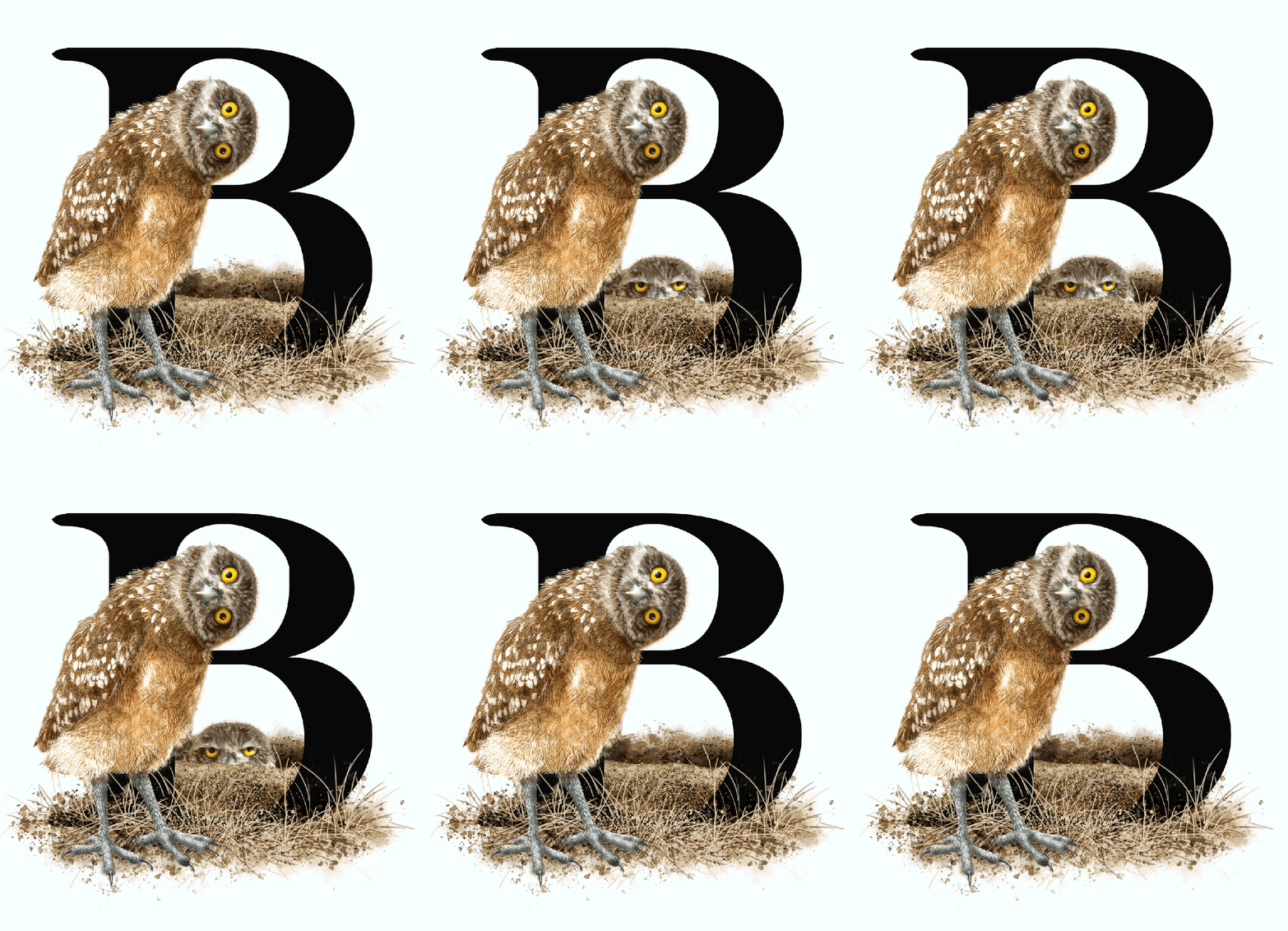
Burrowing owl.
“The environment is where we all meet, where we all have a mutual interest. It is the one thing all of us share.”
– Lady Bird Johnson
Burrowing owls are quite simply, adorable. They are tiny, between 7.5 – 11 inches; they can look a bit like a curious cartoon villain. They live like rodents in underground burrows, laying eggs many feet under the dirt. Usually, they don’t dig into the ground themselves but instead occupy tunnels dug by ground squirrels, prairie dogs, or other critters. The owls move in if the burrow is vacant or by forcefully evicting its resident (by eating it).
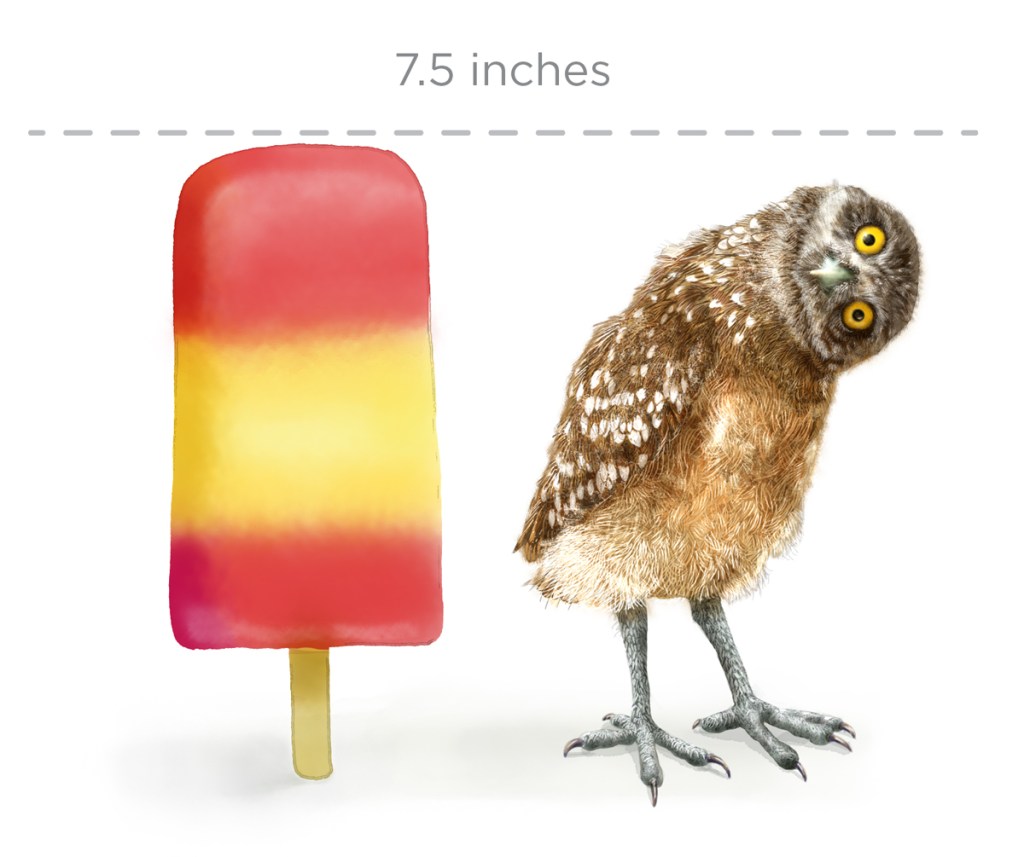
I grabbed a frozen fruit bar from the freezer and measured it, exactly 7.5 inches. This illustration gives their size a little more perspective.
Burrowing owls are also extremely playful, displaying many quirky habits and games. Imagine all these little owls with bright yellow eyes popping up and down from holes in the earth.
My first question though, was “why the ground?” How did these little owls come to live in abandoned burrows created by other animals? The answer is adaptation. Burrowing owls have learned to adapt to human-made landscapes, and – climate control: Living underground provides a stable microclimate, helping the owls regulate their body temperature more efficiently. Burrows offer protection from extreme heat during the day and keep them warmer during chilly nights.

Unlike many other owl species that are primarily nocturnal, burrowing owls are diurnal, meaning they are active during both day and night. Living in burrows allows them to hunt and catch their prey during the daytime when other owls may be less active.
– Guy McPherson
“If you really think that the environment is less important than the economy, try holding your breath while you count your money.”

These are just some interesting facts about the adorable Burrowing owl, but the most important is the topic of threats and conservation: Burrowing owls face various threats, including habitat loss, human disturbance, and predation. They are listed as a species of conservation concern in many regions, and efforts are being made to protect their habitats and promote their well-being.
The Beautiful World Alphabet so far; no rhyme or reason, just what pops up!
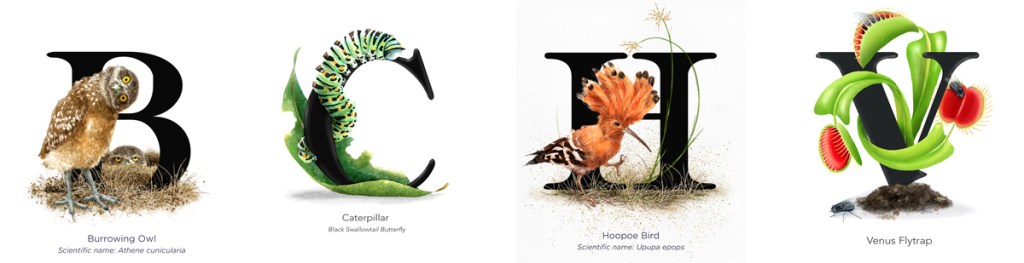
Hope you enjoyed a sneak-peak into the life of the burrowing owl. – Thank you!
 Liza Hartman Design
Beautiful artwork, as always! We may have to take some tips from the burrowing owl to adapt to our latest boiling temperatures.
LikeLiked by 1 person
Hi Rosaliene! You are so right, 😁 let that adaptable solutions pour forth! It’s been such high temperatures here and we have very hot summers to begin with 🥵. When I read the owl went underground regarding climate, I remembered the many families of friends who simply moved into their basements for the summer 😊. Homes with basements was brilliant foresight! Hope you are in a manageable area 🌷 and thank you for the lovely compliment Rosaliene ❤️☮️
LikeLiked by 1 person
Our temperatures are in the 80s, too hot for me. I’m staying indoors and only venture outdoors until after 5 p.m.
LikeLiked by 1 person
🦉
LikeLiked by 1 person
🌷☮️❤️
LikeLike
Wonderful!
LikeLiked by 1 person
Thank you Cindy!
🌷☮️❤️
LikeLike
I love them Liza, and I think they would be adorable critters to get to know. And you have created them well, they look so life like, especially that one eye wink to check me out 🤣 May that ‘B’ ever ‘B’ among us, I would hate to lose such a lovely creature 😀❤️🙏
LikeLiked by 1 person
Hi Mark, and thank you! Learning about these tiny owls, their habitat, adaptability, and happy hearts of play was also a wonderful reminder of our own personal presence each day for me. “B” flexible, adaptive to changing circumstances, and always with a sense of play 😊. As you so cleverly put it, lol, “May that ‘B’ ever ‘B’ among us….” And May WE be among them! 😂. Thanks again, Mark! 🌷☮️❤️
LikeLiked by 1 person
Aw, they’re adorable!
LikeLiked by 1 person
Thank you so much Fraggle! 😊☮️❤️
LikeLiked by 1 person
Your wonderful alphabet continues to take shape, and the “B” for Burrowing Owls is a fabulous letter & animal. Very nicely done, dear Liza ~ have a great week ahead! 🌺🎨😎
LikeLiked by 1 person
Thank you Phil, I’m so glad you liked it! You as well, have a lovely weekend 🌷☮️❤️
LikeLiked by 1 person
Thank you, my friend 🌻
LikeLiked by 1 person
Week… arrggg ..autocorrect 😜
LikeLiked by 1 person
😂 Yes ✅
LikeLike
Oh so charming Liza! The wisdom of mother nature and it’s creatures is amazing.
LikeLiked by 1 person
Hi Cathy, I completely agree, nature keeps me in awe every day 🙂 Thank you!
LikeLiked by 1 person
Delightful! I especially enjoyed the one blinking eye. 😉
LikeLiked by 1 person
Thank you Hillary! While creating the .gif “much giggling” ensues…. ha!
LikeLike
Nice post 💖
👋🙏 I started following your blog ❤️
I hope you follow my blog. We both grow. Interacting in our posts.
Thank you 🙏
A cordial greeting David López Moncada 🇪🇸🫂
(https://pkmundo.com/)
LikeLike